Heynova (Shanghai) New Material Technology CO., Ltd.

Heynova's PAG products have ultra-high purity and excellent photosensitizing properties. Through self-developed molecular design technology, the company has realized precise control of acid diffusion while ensuring extremely low metal impurity content, especially suitable for advanced processes below 28nm. The company's products have wide compatibility and flexible customization, and can work with a variety of resin systems, compatible with mainstream photoresist systems, effectively improving the resolution and pattern fidelity of photoresist.


Our Range of Photoacid Generator (PAG)

Our Range of Photoacid Generator (PAG)

What Is a Photoacid Generator (PAG)?

What Is a Photoacid Generator (PAG)?

A photoacid generator (PAG) is a photosensitive compound that generates acid after exposure to light. PAGs are key components in chemically amplified photoresist systems, where the generated acid initiates chemical reactions during post-exposure processing.

In a photoresist formulation, the PAG works together with other components such as resin, solvent and additives. The selection of a suitable PAG depends on factors including chemical structure, acid generation behavior, compatibility with the resist system, purity requirements and process conditions.


Compare Heynova PAG Products by Chemistry Family

Compare Heynova PAG Products by Chemistry Family

The Heynova PAG portfolio includes ionic sulfonium and iodonium salts, together with nonionic diazo sulfone, imide sulfonate and oxime sulfonate products. The table below presents representative products and currently published specifications for each chemistry family.

PAG TypeChemistry FamilyRepresentative Heynova ProductsHPLC PurityPublished Metal-Ion Levels
Ionic PAGSulfonium Salt PAGs

Triphenylsulfonium 10-Camphorsulfonate, CAS 227199-92-0

1-(4-Butoxy-1-Naphthalenyl)tetrahydro-Thiophenium Perfluorobutanesulfonate, CAS 209482-18-8

≥99%≤50–100 ppb each, depending on grade
Ionic PAGIodonium Salt PAGs

Bis(4-Tert-Butylphenyl)iodonium Trifluoromethanesulfonate, CAS 84563-54-2

Bis(4-Tert-Butylphenyl)iodonium Perfluoro-1-Butanesulfonate, CAS 194999-85-4

≥99%≤100 ppb each for listed grades
Nonionic PAGDiazo Sulfone PAGs

Bis(Cyclohexylsulfonyl)diazomethane, CAS 138529-81-4

Bis(T-Butylsulfonyl)diazomethane, CAS 138529-84-7

≥99%≤50–100 ppb each, depending on grade
Nonionic PAGImide Sulfonate PAGs

5-Norbornene-2,3-Dicarboximidyl Trifluoromethanesulfonate, CAS 133710-62-0

N-Hydroxy-5-Norbornene-2,3-Dicarboximide Perfluoro-1-Butanesulfonate, CAS 307531-76-6

≥99%≤10 ppb each for selected grades
Nonionic PAGOxime Sulfonate PAGsEthanone Derivative Bis[o-(Propylsulfonyl)oxime], CAS 300374-81-6≥99%≤100 ppb each


Advantages of Photoacid Generator (PAG)

Advantages of Photoacid Generator (PAG)

Heynova's photoacid generator (PAG) in the semiconductor applications show a variety of advantages:

  • High quality: The product has extremely high purity and low impurity content, which effectively avoids the introduction of impurities in the photolithography process and ensures the high precision and reliability of semiconductor manufacturing.

  • High yield: High quantum yield of photoacid generator, a small amount of light can generate a sufficient amount of acid, significantly improve the efficiency of lithography, shorten the exposure time.

  • Good compatibility: Good compatibility with all kinds of photoresist resin, it can effectively avoid phase separation and other quality problems, to ensure the accuracy of photolithography pattern.

  • Good thermal stability: Can meet the high temperature requirements of complex lithography processes.

  • Customizable design: The molecular structure of PAG can be adjusted according to the production process, which is suitable for special processes.

Uses of Photoacid Generator (PAG)

Uses of Photoacid Generator (PAG)

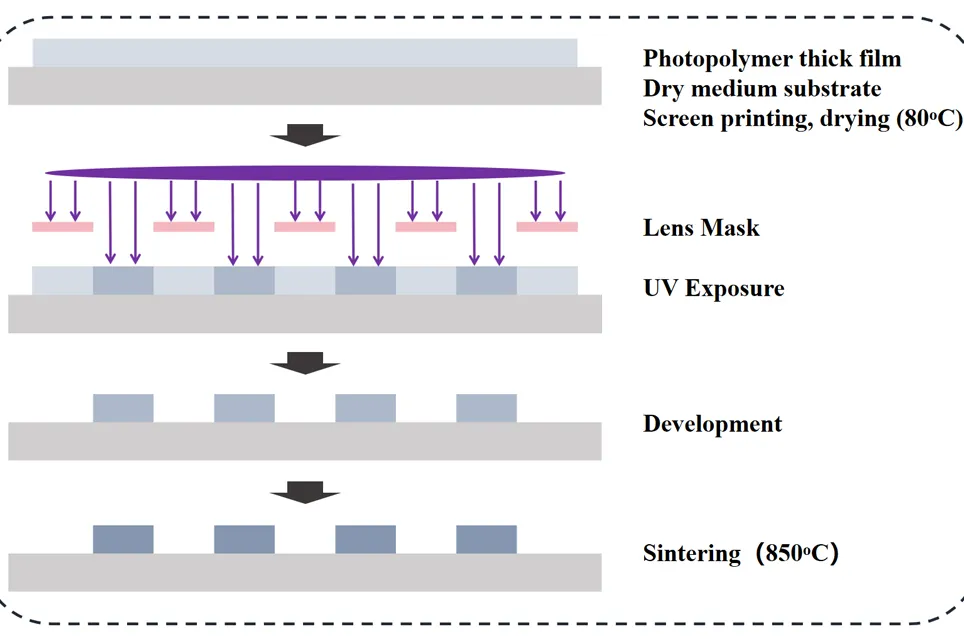
As a key photosensitive material for photoresists, PAG plays a central role in semiconductor manufacturing. In KrF photoresist, after exposure at 248nm wavelength, sulfonic acid is generated to induce structural changes in the resin and precisely regulate pattern transfer with a resolution of 120nm, which is suitable for chip manufacturing in mature processes. ArF photoresist is used with 193nm light source, and PAG meets the requirements of high-resolution and low roughness for advanced processes up to and including 7nm, and the accuracy of line width is controlled at ±3nm with the help of high acid productivity and strong acidity. Meanwhile, in the lithography of TFT arrays for display panels, the PAG helps the photoresist to form fine circuits and improve the display performance of the panels.

Uses of Photoacid Generator (PAG)

Photoacid Generator (PAG) FAQs

null
Need Advanced Electronic Chemicals Solutions?
Get a Quote Now! Your Electronic Chemicals Needs, Our Expertise.
We use cookies to offer you a better browsing experience, analyze site traffic and personalize content. Part of the tracking is necessary to ensure SEO effectiveness,
By using this site, you agree to our use of cookies. Visit our cookie policy to learn more.
Reject Accept