Film loss during photolithography of thick-film photosensitive polyimide (PSPI, ≥10 μm) can be broadly divided into two parts: during the development stage, organic developer penetrates the cross-linked network, extracting uncross-linked oligomers and free chain segments; during high-temperature curing, imide ring-closing reactions release small molecules, and thermal degradation further contributes to mass loss. When selecting resins based on molecular structure, the core objectives are to minimize the escape of cyclized small molecules, suppress the swelling and extraction of polymer chains in the developing solvent, and simultaneously ensure the penetration of i-line UV light through the thick film.
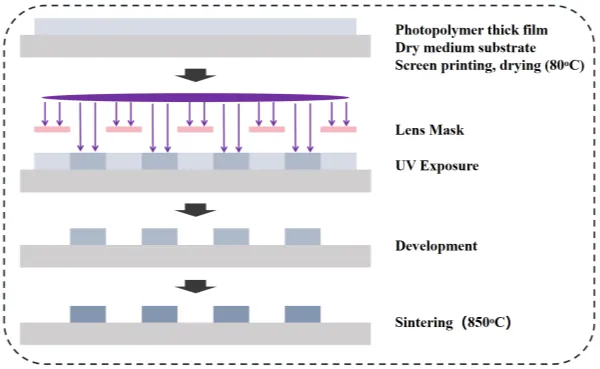
Precursor Type: The Basis for Cyclization Weight Loss and Swelling Resistance
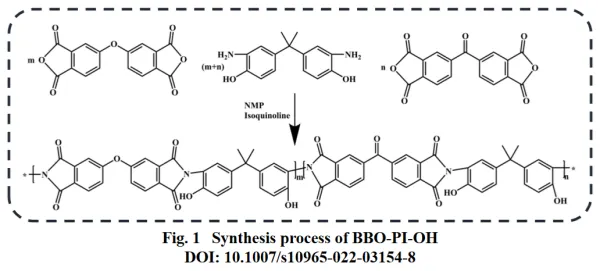
The precursor is the primary consideration in PSPI selection; cyclization weight loss and resistance to solvent swelling vary significantly among different structures. Polyamide acid (PAA) contains a large number of free carboxyl groups; its dehydration loss during thermal imidization is high, and its highly polar structure readily undergoes solvation with the developer solution. The cross-linked film remains prone to swelling, and low-molecular-weight segments are easily eluted; therefore, scenarios involving thick films or high film retention should be avoided as much as possible. Polyamide acid ester (PAE) converts carboxyl groups to -COOR through esterification; cyclization releases only small alcohol molecules, resulting in weight loss far lower than that of PAA. Weakened molecular hydrogen bonding leads to minimal residual solubility during pre-baking, significantly reducing the risk of swelling during development. Among these, PAE with side-grafted photosensitive groups outperforms small-molecule blends by a wide margin; in the latter, unreacted components are easily extracted by the developer, reducing the retention rate, whereas the side-grafted version directly forms a cross-linked network between macromolecules, leaving no free, extractable components. Pre-imide-modified soluble PI exhibits the best performance; since the majority of imide rings have already been formed on the main chain, curing results in virtually no release of small molecules, and it demonstrates outstanding resistance to swelling. It requires only modification with UV-absorbing monomers to adapt to thick-film exposure, though the synthesis cost is relatively high. Priority order for selection: side-chain photocrosslinkable soluble PI > bonded photosensitive groups PAE > small-molecule-blended PAE > PAA.
Diacid-diamine backbone: regulating UV transmittance and network free volume
The dianhydride-diamine backbone is a key screening factor for PSPI, directly regulating the conjugation degree of the main chain, UV transmittance at 365 nm, and the free volume of the cross-linked network. The larger the aromatic conjugated system, the stronger the i-line UV absorption; light decays rapidly within thick films, resulting in sufficient cross-linking at the surface but insufficient cross-linking at the bottom. This makes the bottom segments prone to being eluted by the developer, which directly reduces the film retention rate. Highly conjugated dianhydrides such as PMDA and BTDA are suitable only for thin films; for thick films, BPDA is the preferred choice: it has low conjugation, good 365 nm UV transmittance, a rigid main chain, and a small free volume in the cross-linked network, which hinders solvent penetration and suppresses swelling, making it the mainstream dianhydride selection for thick-film PSPI. Aliphatic CBDA dianhydrides offer excellent light transmittance and are suitable for low-temperature curing scenarios; however, they reduce Tg and thermal stability, requiring a trade-off with reflow soldering reliability. For diamines, PPDA should be the primary choice, with a rigid monomer as the main component and a small amount of flexible units to regulate film toughness; Long ether-linked and long alkyl-linked flexible diamines increase segmental free volume, exacerbating swelling and segmental extraction; they should therefore be used only in small amounts for stress regulation. Siloxane side-chain modification can mitigate cracking in thick films but increases the free volume of the network; the modification ratio must be strictly controlled in high-retention film systems.
Molecular Chain Characteristics: Control of Molecular Weight, Distribution, and Photoreaction Grafting Efficiency
Molecular weight and its distribution determine the content of soluble oligomers in the system, which directly affects the film retention during development. If the number-average molecular weight is too low, the polymer chains tend to be short, and the system contains a large number of oligomeric fragments; even after photocrosslinking, these small molecular fragments are easily extracted by the developer, resulting in a loss of film thickness. Conversely, if the molecular weight is too high, the resin viscosity increases sharply, making it more difficult to spin-coat thick films; molecular entanglement intensifies, leading to solvent entrapment, increased residual solvent, and amplified swelling. Therefore, for thick-film PSPI, a moderate molecular weight window must be selected to balance film-forming ability and resistance to extraction. Resins with a narrow molecular weight distribution should be prioritized, as materials with a broad distribution are often accompanied by significant low-molecular-weight tails; these oligomeric components are the primary source of development quality loss, and GPC characterization should focus on the proportion of low-molecular-weight tail peaks. There is an optimal range for the grafting rate of photosensitive groups: insufficient grafting results in low crosslinking density, making it difficult for the network to constrain the polymer chains, leading to excessive swelling and poor film retention; conversely, an excessively high grafting rate causes the crosslinked network to become too dense, resulting in increased modulus, decreased elongation at break, and the accumulation of internal stress within the film, thereby increasing the risk of cracking and delamination under temperature cycling.
HEYNOVA
an excellent service provider of key new materials and overall solutions for the global high-tech industry, focusing on the R&D and production of Polyimide monomer, Photoresist monomer & PAG, OLED monomer, Lithium battery materials, and customized services.


 English
 Nederland


![Dibenzo[f,h]quinoxaline, 2-[3'-(6-phenyl-4-dibenzothienyl)[1,1'-biphenyl]-3-yl]- 1456720-50-5 C46H28N2S](/uploads/image/20251017/1456720-50-5-china.webp "Dibenzo[f,h]quinoxaline, 2-[3'-(6-phenyl-4-dibenzothienyl)[1,1'-biphenyl]-3-yl]- 1456720-50-5 C46H28N2S")

-new-material-technology-co.,-ltd.-wechat.webp)