Humidity sensors are core components in environmental monitoring, industrial manufacturing, flexible electronics, and the aerospace sector. Polymer-based humidity-sensitive sensors have become a hot topic of research due to their simple fabrication processes, excellent film formability, and ease of structural modification. Polyimide, a functional polymer material with outstanding overall performance, is characterized by high-temperature resistance, strong chemical stability, excellent mechanical properties, and good process compatibility, making it an ideal humidity-sensitive functional material for the fabrication of humidity sensors.
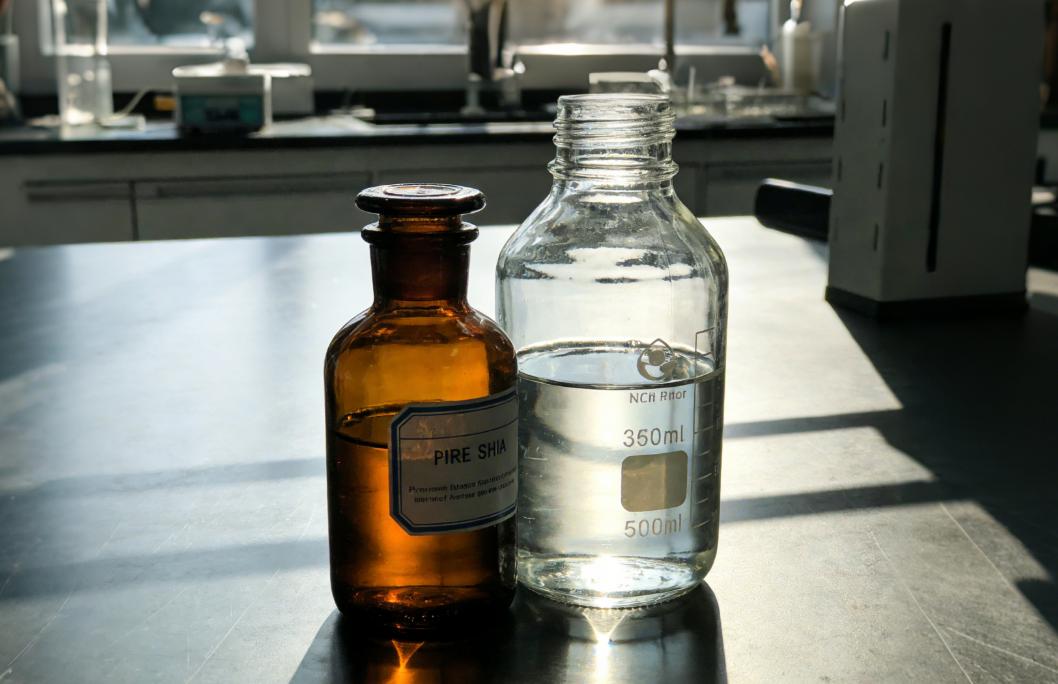
Chip manufacturing is a series of precise, step-by-step processes, with the lithography stage often referred to as “micro-sculpting” of chips. Current mainstream processes have advanced to the tens-of-nanometers and even single-nanometer levels, where circuit widths are far smaller than the diameter of a human hair. At such a microscopic scale, even trace impurities invisible to the naked eye can become hidden threats to chip manufacturing. Impurities in photoresist raw materials are primarily divided into two categories: organic impurities and metal ion impurities. Both can disrupt the production process in multiple ways—including optical performance, pattern quality, electrical performance, and product yield—which is the core reason why the industry strictly enforces ppb-level purity control.
From the perspective of the photolithography process itself, organic impurities directly interfere with the photoresist’s photosensitive reaction and pattern transfer efficiency. Photoresists rely on photosensitive components to undergo chemical reactions under specific light sources, thereby completing the exposure, development, and etching processes. If organic impurities such as unreacted byproducts, residual solvents, or isomers are present in the raw materials—even at concentrations as low as a few dozen ppb—they can alter the photoresist’s photosensitivity, resolution, and etch resistance. Minor issues include development residue, rough pattern edges, and line width deviations exceeding specifications, while severe cases can lead to critical defects such as pattern loss, pinholes, and fogging. Additionally, these impurities can alter the photoresist’s overall viscosity and film uniformity, resulting in uneven coating thickness across the wafer surface and rendering the entire wafer unusable. Standardized HPLC testing, however, can accurately detect trace organic impurity peaks, enabling the early screening out of problematic raw materials and fundamentally mitigating risks in subsequent processes.

Compared to organic impurities, metal ion impurities pose a more far-reaching threat and are the top priority in ppb-level control. Common metal ions such as sodium, potassium, iron, copper, and calcium exhibit extremely high mobility and electroactivity. During post-lithography processes such as baking, etching, and power-on testing, these ions gradually migrate into the silicon substrate, gate oxide layer, and active regions of the chip. Alkali metal ions, in particular, cause threshold voltage drift in transistors, leading to timing errors and signal delays during chip operation. Heavy metals such as iron and copper form charge recombination centers within the semiconductor, increasing device leakage current and significantly shortening the chip’s lifespan. For high-reliability products such as automotive chips, power semiconductors, and memory chips, even minute levels of metal contamination can pose safety risks and cause failures in end-user devices. Industry practice has long confirmed that in advanced processes of 28 nm and below, once metal impurities exceed 10 ppb, wafer yield plummets, and the entire batch of products may face scrapping. Therefore, in addition to using HPLC to control organic components, companies also employ ICP-MS equipment for specialized detection of metal ions, achieving dual control over both organic and inorganic impurities.
As semiconductor technology evolves, with high-end photoresists such as KrF, ArF, and EUV being increasingly adopted and chip processes continuing to shrink, the requirements for raw material purity have risen accordingly. Raw materials for photoresists in mature processes must be consistently controlled at the ppb level, while EUV photoresists designed for 3 nm and 5 nm nodes impose even higher standards for impurity control. These stringent purity requirements have compelled the entire upstream supply chain to upgrade purification processes and testing systems. Today, the HPLC area normalization method has become the standard for both incoming and outgoing inspections of photoresist raw materials. Combined with joint testing using equipment such as ICP-MS, this approach enables comprehensive monitoring of organic components and metal ions. From raw material synthesis and multi-stage purification to comprehensive testing of finished products, every step of the process is centered on “reducing impurities and stabilizing composition,” striving to maintain the critical threshold of ppb-level purity.
Behind the seemingly small unit of ppb lies the semiconductor industry’s relentless pursuit of precision manufacturing. For a long time, the technical barriers associated with high-purity photoresist raw materials have been a key bottleneck constraining the industry’s development. To achieve full autonomy and control across the entire photoresist supply chain, we must master the synthesis and purification technologies for high-purity monomers and specialized resins. We specialize in the R&D and production of core upstream photoresist raw materials. We have established standardized purification production lines and professional cleanroom testing laboratories, integrating standardized HPLC full-component testing throughout the entire production process. We strictly control the content of main components, organic impurity peaks, and trace metal ions to ensure that every batch of products maintains stable composition and meets impurity standards, reliably meeting the application needs of KrF, ArF, advanced packaging, and other scenarios. Leveraging mature synthesis processes, rigorous operating procedures, and a stringent quality control system, we provide stable and reliable raw material support to downstream photoresist manufacturers.
HEYNOVA
an excellent service provider of key new materials and overall solutions for the global high-tech industry, focusing on the R&D and production of Polyimide monomer, Photoresist monomer & PAG, OLED monomer, Lithium battery materials, and customized services.


 English
 Nederland





-new-material-technology-co.,-ltd.-wechat.webp)