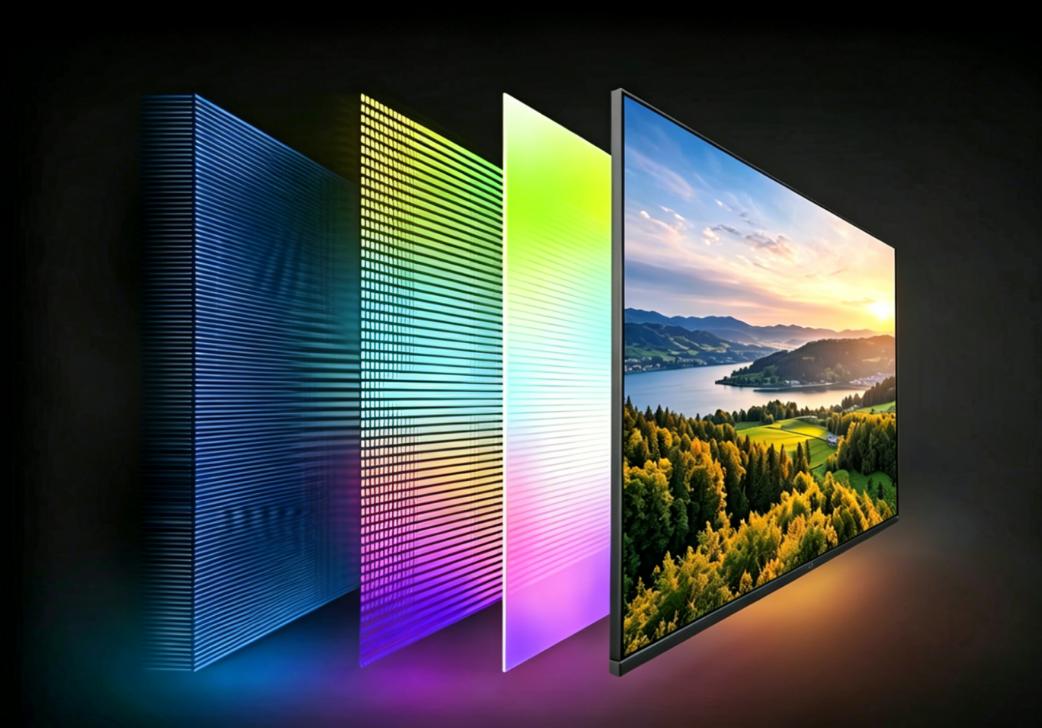
Display technology is rapidly evolving toward wider color gamuts, higher resolutions, and smaller pixel sizes. Traditional phosphors and organic dyes struggle to meet these demands due to their broad spectral lines and poor stability. Quantum dots, with their narrow half-width, high quantum yield, and precisely tunable emission wavelengths, have emerged as the material of choice for next-generation display light-emitting materials. By combining quantum dots with a photoresist matrix to create a quantum dot photoresist that can be patterned using UV/visible light, it is possible to precisely fabricate micron- and submicron-scale RGB pixel arrays. This addresses the key challenges of traditional quantum dot films, which cannot be micro-patterned and struggle to balance color gamut and resolution.
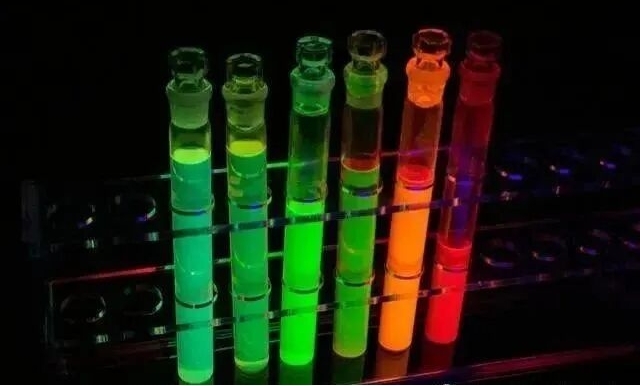
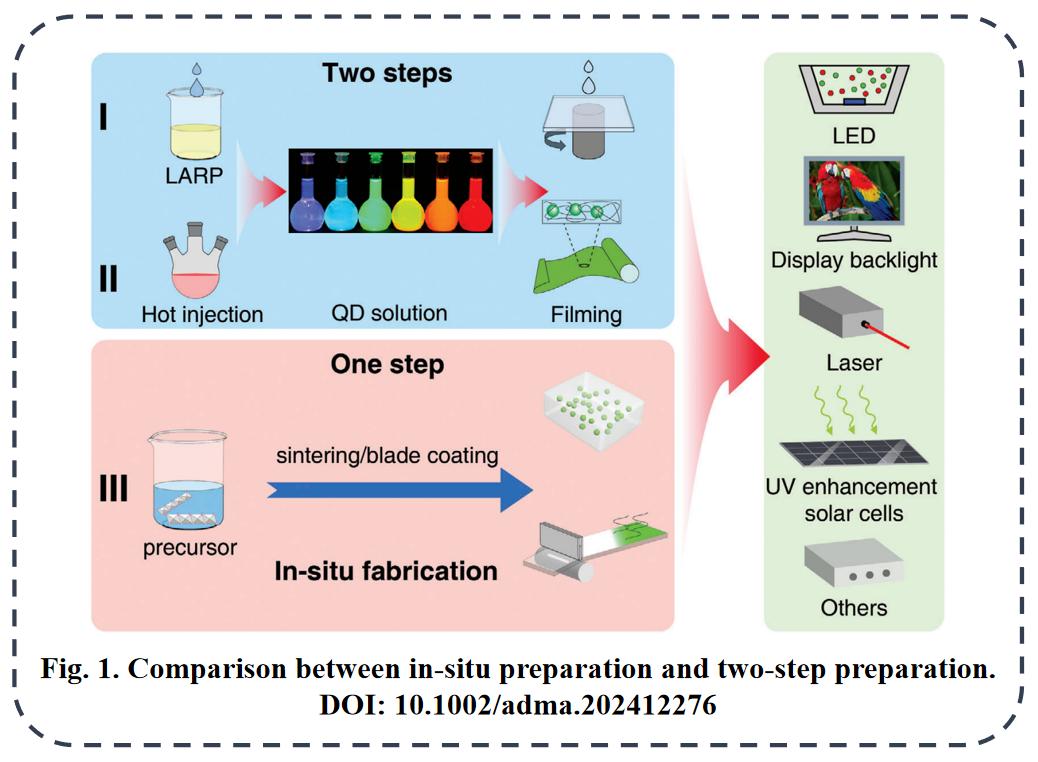
The key to preparing quantum dot photoresists lies in achieving uniform dispersion of quantum dots in the resin, maintaining high luminescence efficiency, and ensuring compatibility with photolithographic patterning processes. The mainstream methods are divided into ex-situ (post-mixing) and in-situ synthesis. There are significant differences in the processes for adapting to the three primary colors:
Process flow: Quantum dot pretreatment→Preparation of photoresist premix→QD dispersion and compounding→Filtration and degassing→Quantum dot photoresist ready for spin coating. The ex-situ method is a mature process with controllable QD purity and flexible formulations; however, QDs are prone to loss during ligand exchange and dispersion, and blue-light QDs exhibit poor stability, making this method unsuitable for the large-scale production of blue-light photoresists.
Process Flow: Precursor premixing→In-situ growth→Curing and patterning. The in-situ synthesis method eliminates the need for QD separation and washing, maximizing the retention of luminescence efficiency and significantly improving the stability of blue-light QDs. However, it requires high precision in precursor ratio and presents significant challenges in process control. The entire preparation process must be conducted at low temperatures (< 40oC), in the dark, and under an inert atmosphere (N2/Ar). Precise control of QD concentration is required, as excessive concentration can lead to aggregation and quenching. Uniform dispersion must also be ensured; this can be achieved through ultrasonication and high-shear mixing, combined with specialized dispersants, to prevent QD aggregation.
There are currently three major technical bottlenecks in quantum dot photoresists: First, blue quantum dots are susceptible to hydroxyl and oxygen quenching as well as photodegradation. Although these issues can be mitigated through resin barriers and ligand protection, further technological breakthroughs are still needed, and it remains difficult to balance photoluminescence quantum yield with device lifetime; Second, high-resolution patterning is challenging; increasing quantum dot concentration leads to enhanced scattering and reduced resolution, making the fabrication of micro- and nano-pixels smaller than 5 μm difficult; third, under the demands for cadmium-free and environmentally friendly solutions, cadmium-based quantum dots, while highly efficient, are toxic, whereas the stability and mass producibility of cadmium-free indium phosphide and perovskite quantum dots still require optimization. In the future, at the materials level, it will be necessary to develop cadmium-free, highly stable blue quantum dots, new high-barrier resins, and low-yellowing photoinitiators to improve the consistency of red, green, and blue colors; at the process level, it will be necessary to optimize in-situ synthesis and inkjet-photolithography hybrid processes to achieve high-resolution, high-brightness RGB pixel arrays; At the industrialization level, breakthroughs are needed to overcome the mass production bottlenecks of blue-light photoresists, driving their large-scale application in Micro-LED and AR/VR micro-display fields.
Currently, in industrial applications, the light-emitting sources and physical mechanisms of the three RGB pixels differ fundamentally. Specifically, blue pixels achieve direct electroluminescence from the underlying InGaN-based blue Micro-LED chip, emitting light directly without requiring any wavelength-conversion materials. In contrast, red and green pixels rely on the photoluminescence of quantum dot photoresists for color conversion. The blue light emitted by the chip serves as the excitation source; after being absorbed by the red and green quantum dots in the photoresist, it is re-emitted as narrow-band, high-purity red and green light through bandgap transitions. Although blue-light quantum dot photoresists suffer from extremely poor stability due to their high susceptibility to moisture, oxygen, UV light, and photolithography processes—and are not essential in current mainstream color-conversion architectures—the academic community continues to conduct relevant research. The core motivation lies in laying the foundation for next-generation, fully UV-excited, full-color conversion display architectures. Simultaneously, by overcoming the stability challenges of blue-light systems, this research aims to drive comprehensive breakthroughs across the entire quantum dot photoresist material system—including resin design, ligand passivation, and patterning processes—thereby further enhancing the color gamut, resolution, light output uniformity, and contrast of display devices.
HEYNOVA
an excellent service provider of key new materials and overall solutions for the global high-tech industry, focusing on the R&D and production of Polyimide monomer, Photoresist monomer & PAG, OLED monomer, Lithium battery materials, and customized services.


 English
 Nederland


![2-Bromobenzo[b]-Naphtho[2,3-D]furan 1627917-16-1 C16H9BrO](/uploads/image/20250714/1627917-16-1-china.webp "2-Bromobenzo[b]-Naphtho[2,3-D]furan 1627917-16-1 C16H9BrO")
-new-material-technology-co.,-ltd.-wechat.webp)