Humidity sensors are core components in environmental monitoring, industrial manufacturing, flexible electronics, and the aerospace sector. Polymer-based humidity-sensitive sensors have become a hot topic of research due to their simple fabrication processes, excellent film formability, and ease of structural modification. Polyimide, a functional polymer material with outstanding overall performance, is characterized by high-temperature resistance, strong chemical stability, excellent mechanical properties, and good process compatibility, making it an ideal humidity-sensitive functional material for the fabrication of humidity sensors.
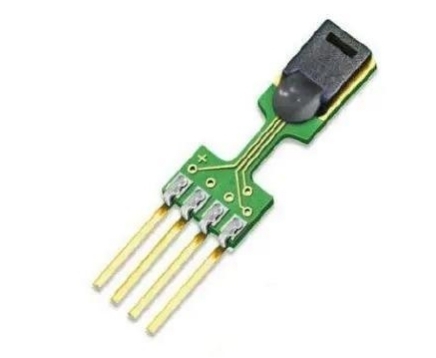
Humidity sensing plays an indispensable role in industrial and agricultural production, semiconductor manufacturing, smart homes, medical warehousing, and other applications. Traditional humidity-sensitive materials, such as metal oxides, electrolytes, and common polymers, generally suffer from poor temperature resistance, significant hysteresis errors, insufficient flexibility, or difficulties in process integration. In contrast, the molecular structure of polyimide contains cyclic polar imide groups, combining the advantages of polymer materials—such as ease of film formation and modifiability—with the high-temperature resistance and corrosion resistance of inorganic materials. This makes it ideally suited for the fabrication of high-performance humidity sensors, and it has now become a key research focus in the field of polymer humidity sensors.
In terms of sensor classification, polymer humidity sensors can be divided into four categories based on their operating principles: resistive, capacitive, complex impedance, and resonant types, among which capacitive polyimide humidity sensors are the most widely used. The sensing principle is as follows: the polyimide film contains numerous intermolecular gaps and polar hydrophilic groups. When environmental humidity changes, water molecules enter the film through adsorption and desorption, forming hydrogen bonds with the polar groups. Since the dielectric constant of water is much higher than that of polyimide, the overall dielectric constant of the film changes significantly after moisture absorption. In a fixed electrode structure, the sensor’s capacitance value changes in a predictable manner with humidity, thereby converting the humidity signal into an electrical signal. Compared to resistive sensors, capacitive polyimide humidity sensors offer better linearity, lower hysteresis error, and superior long-term stability, making them more suitable for high-precision detection applications.
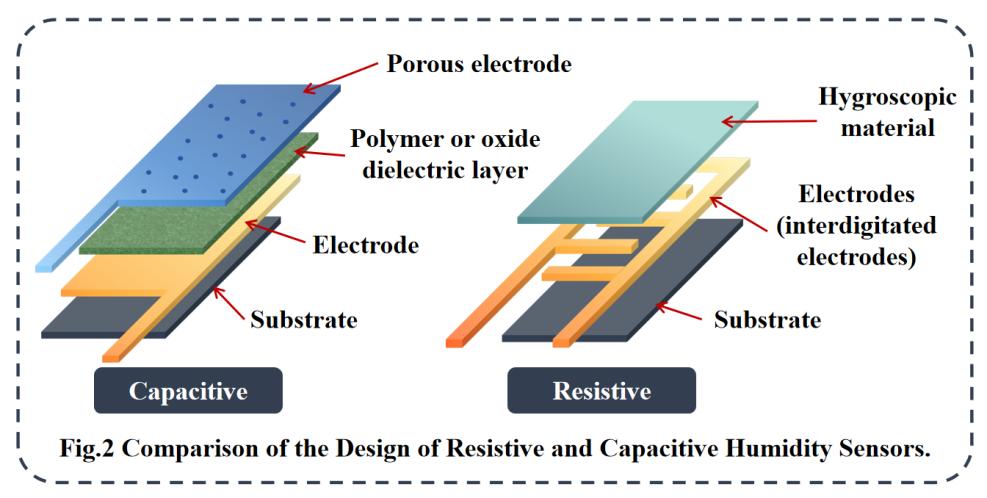
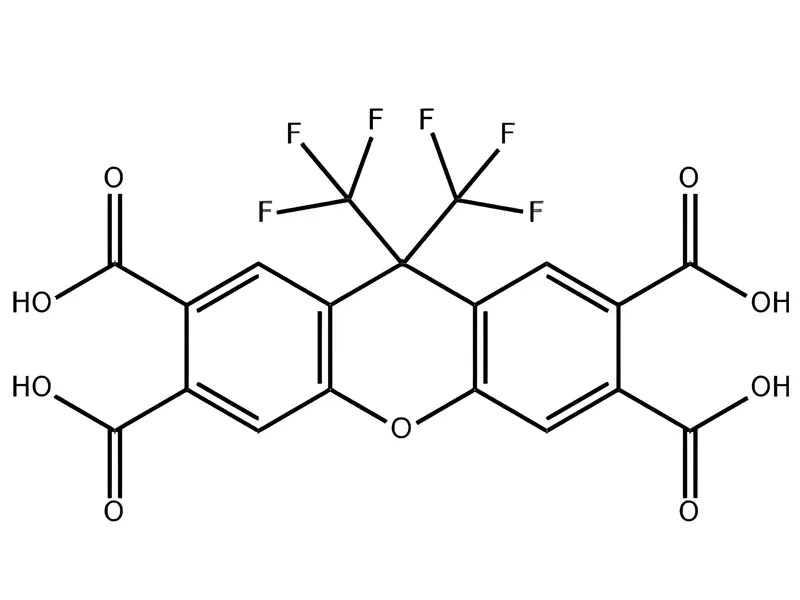
In terms of device structure, polyimide humidity sensors primarily consist of two components: electrode materials and humidity-sensitive materials, supplemented by a substrate and encapsulation structure. The humidity-sensitive core utilizes a polyimide film, typically prepared from polyamidine as a precursor through spin-coating and high-temperature imidization processes. Modifications such as molecular fluorination and nanoparticle doping can further optimize its moisture-absorption response performance. Common electrode materials include Cr/Au and Ti/Au composite metals. The underlying metal enhances adhesion between the electrode and the polyimide film, while the top-layer gold electrode, with its high chemical inertness and resistance to oxidation, ensures stable electrical signal acquisition. For flexible applications, conductive materials such as silver nanowires and PEDOT:PSS can be selected to meet the requirements of bendable devices. Common structural configurations include planar interdigitated electrode structures and sandwich-type parallel-plate structures. Interdigitated electrode fabrication is simple and suitable for micro- and nano-fabrication, while parallel-plate structures offer higher sensitivity.
The unique advantages of polyimide materials confer outstanding comprehensive performance on the humidity sensor. These sensors have a wide operating temperature range and can function stably in harsh environments from -55oC to 250oC, far outperforming conventional polymer humidity-sensitive devices such as polyvinyl alcohol; they also exhibit excellent chemical stability, resisting acids, alkalis, organic solvents, aging, and radiation, making them suitable for complex operating conditions such as semiconductor lithography production lines and high-temperature automotive interiors. Furthermore, polyimide’s excellent mechanical flexibility allows for the fabrication of flexible thin-film sensors that can conform to curved substrates and human skin, offering vast application potential in emerging fields such as wearable health monitoring and smart textiles.
Currently, polyimide humidity sensors still face certain technical challenges. Pure polyimide suffers from issues such as slow desorption rates, significant hysteresis errors, and temperature drift interference. The industry primarily addresses these challenges by constructing porous polyimide structures to shorten the diffusion path of water molecules, doping with graphene and carbon nanotubes to enhance conductivity and response characteristics, integrating micro-heating structures to accelerate water desorption, and utilizing temperature compensation circuits to mitigate the effects of temperature drift, thereby continuously optimizing the detection accuracy and response speed of the devices.
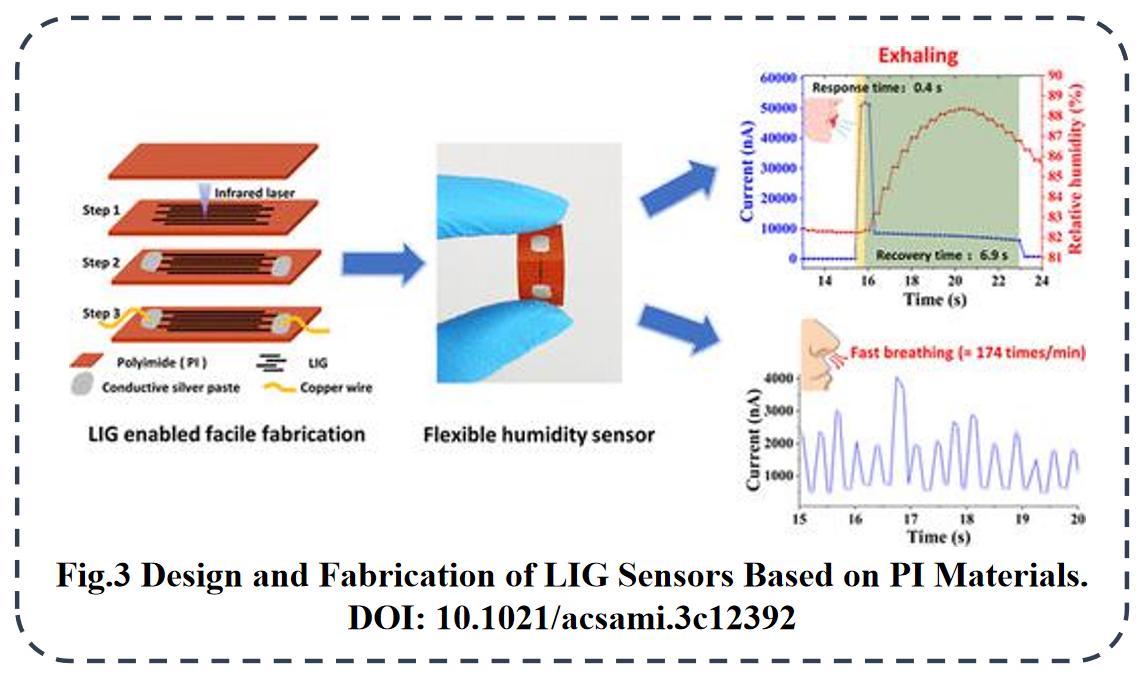
Humidity sensors based on polyimide materials combine the advantages of polymer molding with polyimide’s high-temperature resistance, high stability, and flexibility, thereby addressing many of the shortcomings of traditional humidity-sensitive sensors. With the continuous advancement of micro- and nano-fabrication processes and material modification technologies, polyimide humidity sensors will continue to evolve toward higher sensitivity, lower hysteresis, multifunctional integration, and flexible, wearable designs. They hold immense potential for development and application in fields such as industrial precision measurement and control, aerospace, new energy, and intelligent environmental monitoring.
HEYNOVA
an excellent service provider of key new materials and overall solutions for the global high-tech industry, focusing on the R&D and production of Polyimide monomer, Photoresist monomer & PAG, OLED monomer, Lithium battery materials, and customized services.


 English
 Nederland




-new-material-technology-co.,-ltd.-wechat.webp)