In technological innovations across high-end fields such as flexible electronics, extreme environment monitoring, and biomedicine, sensors serve as the core units for data acquisition, and their performance directly determines the reliability and application limits of the system. As a high-performance engineering polymer, polyimide (PI) has overcome the performance limitations of traditional sensing materials under harsh conditions thanks to its exceptional thermal stability, chemical inertness, mechanical strength, and functional design flexibility, making it one of the key materials and research hotspots in the sensing field in recent years. Leveraging the superior properties of PI, various types of sensor devices can be fabricated through different modification strategies and structural designs, covering multiple detection fields such as physical, chemical, and biological parameters. Each type of device possesses a unique structure and operating principle.
· Flexible Pressure/Strain Sensors
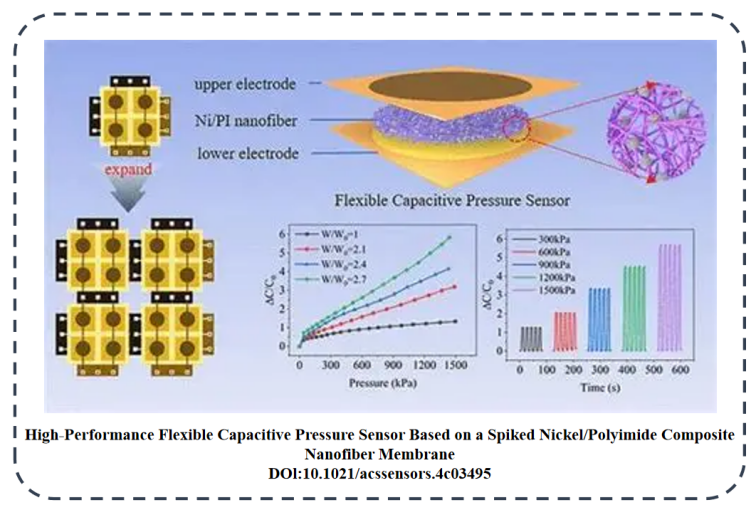
Flexible pressure/strain sensors are among the most extensively studied and maturely applied types of polyimide sensor devices. In piezoresistive pressure/strain sensors, PI is typically used as the flexible substrate, with conductive fillers such as graphene, CNTs, carbon black, or Ag nanowires coated onto or doped into its surface to form a conductive sensing layer. When subjected to pressure or strain, the conductive network of the sensing layer deforms, causing a significant change in resistance. By detecting this change in resistance, quantitative analysis of pressure and strain can be achieved. In capacitive pressure/strain sensors, a PI film serves as the dielectric layer, with metal electrodes positioned on both sides to form a capacitive structure. When subjected to pressure or strain, the thickness or area of the PI dielectric layer changes, causing a shift in capacitance. By detecting these capacitance changes, pressure and strain can be measured.
· Humidity Sensors
The molecular structure of polyimide contains polar groups (such as imide bonds and hydroxyl groups), which exhibit a strong ability to adsorb water molecules. The adsorption of water molecules causes significant changes in the dielectric constant and electrical conductivity of the PI material. Based on this property, high-performance humidity sensors can be fabricated, which are primarily classified into two types: capacitive and resistive. Capacitive humidity sensors typically employ a metal-insulator-metal (MIM) structure, with the PI film serving as the dielectric layer. When environmental humidity changes, water molecules are adsorbed by the PI dielectric layer, causing a change in the dielectric constant, which in turn alters the capacitance value. By detecting this change in capacitance, quantitative humidity measurement can be achieved. Resistive humidity sensors, on the other hand, involve the fabrication of a conductive sensitive layer on a PI substrate. When water molecules are adsorbed, they alter the conductivity of the sensitive layer, thereby enabling humidity detection.
· Gas Sensors
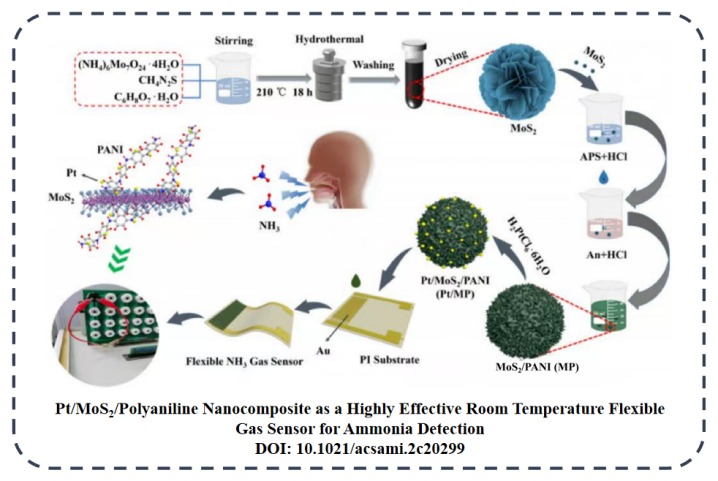
Polyimide-based gas sensors primarily utilize the adsorption properties of PI materials toward specific gases or employ composite sensitive materials to achieve specific gas detection. They have important applications in industrial exhaust gas monitoring, automotive exhaust detection, and deep space exploration. Their operating principles can be broadly categorized into two types: First, the adsorption of gases by pure PI films. When gas molecules are adsorbed by the PI film, they cause changes in the PI’s dielectric constant and electrical conductivity; gas detection is achieved by monitoring these parameter changes; Second, the catalytic effect of PI-based composite sensing materials. By combining PI with sensitive materials such as metal oxides, metal-organic frameworks, and conductive polymers, gas molecules react chemically with the sensing materials, thereby inducing changes in electrical signals to achieve specific gas detection and quantitative analysis.
· Temperature Sensors
Polyimide-based temperature sensors utilize the thermal resistance effect, thermocouple effect, or optical fiber sensing properties of PI materials to achieve wide-range, high-precision temperature detection. Their operating temperature range is significantly broader than that of traditional polymer temperature sensors, covering -200oC to 400oC, making them suitable for extreme temperature monitoring applications. Resistance temperature detectors (RTDs) are the most common type. They are fabricated by depositing a metal film (such as platinum or copper) or a conductive composite layer onto a PI substrate, utilizing the temperature-dependent resistance characteristics of the metal or conductive material to detect temperature.
· Biological and Electrochemical Sensors
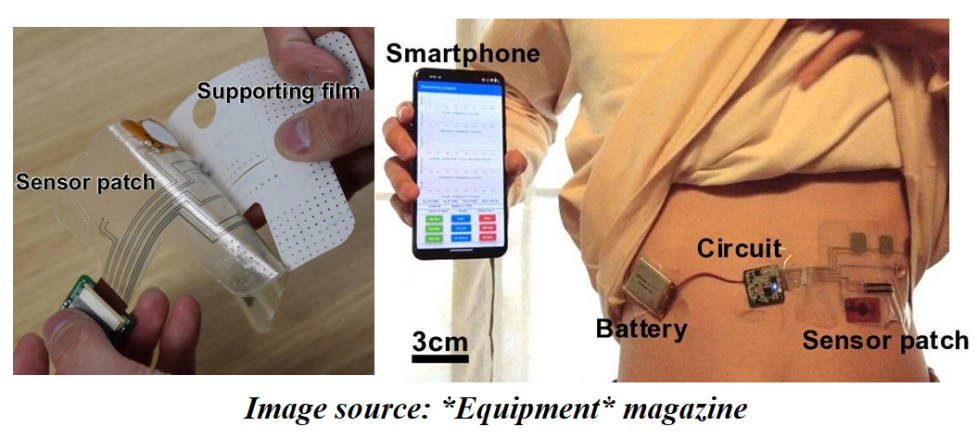
Leveraging polyimide’s biocompatibility, flexibility, and resistance to bodily fluid corrosion, these sensors offer unique advantages in the biomedical sensing field. They primarily include implantable electrodes, neural probes, physiological signal monitoring patches, and biosensors, enabling precise detection of biological signals such as electrocardiograms (ECGs), electromyograms (EMGs), blood pressure, sweat composition, and cell activity. Implantable electrodes and neural probes use PI as a flexible substrate with metal electrodes fabricated on the surface. These can adhere to human tissue or be implanted into the body to enable long-term monitoring of neural signals and cardiac electrical signals. Furthermore, PI’s biocompatibility prevents immune reactions in the human body, while its resistance to corrosion by body fluids extends the device’s service life within the body. Physiological signal monitoring patches utilize a flexible PI substrate that adheres to human skin, enabling non-invasive monitoring of signals such as body temperature and sweat composition, making them suitable for wearable health devices. PI-based biosensors detect specific biomolecules by immobilizing biological recognition elements—such as enzymes, antibodies, and nucleic acids—on the PI surface, finding significant applications in disease diagnosis and drug screening.
HEYNOVA
an excellent service provider of key new materials and overall solutions for the global high-tech industry, focusing on the R&D and production of Polyimide monomer, Photoresist monomer & PAG, OLED monomer, Lithium battery materials, and customized services.


 English
 Nederland



![Dibenzo[f,h]quinoxaline, 2-[3'-(4-dibenzothienyl)[1,1'-biphenyl]-3-yl]- 1332748-57-8 C40H24N2S](/uploads/image/20251017/1332748-57-8-china.webp "Dibenzo[f,h]quinoxaline, 2-[3'-(4-dibenzothienyl)[1,1'-biphenyl]-3-yl]- 1332748-57-8 C40H24N2S")
-new-material-technology-co.,-ltd.-wechat.webp)