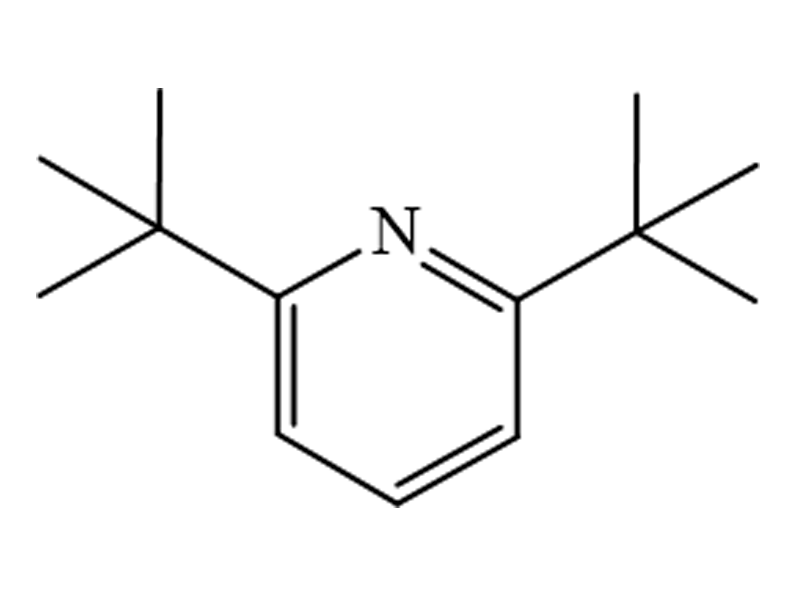
In advanced packaging applications, photosensitive polyimide (PSPI), as the core photosensitive dielectric material, directly determines the patterning accuracy, residual film rate, and thermal stability of wafer-level packaging and fan-out packaging. Photoacid generators (PAGs) are the core functional components of the PSPI system. Selecting the appropriate PAG essentially involves striking a balance between two conflicting criteria—photosensitivity and acid diffusion control—and represents a key challenge in the current development of PSPI formulations for advanced packaging.
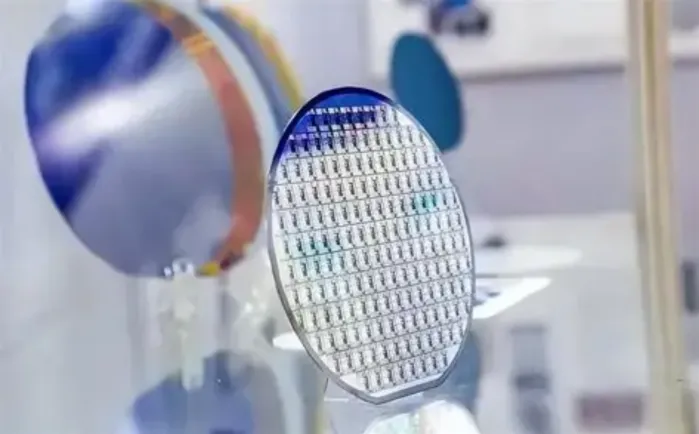
Core Conflict: The Trade-off Between Sensitivity and Acid Diffusion
The imaging principle of PSPI relies on PAG decomposing under UV exposure to produce a strong acid, which catalyzes the cross-linking or polarity reversal of the resin, resulting in the formation of fine patterns after development. Sensitivity represents the material’s ability to respond to exposure energy; high sensitivity means lower exposure doses and higher production line throughput, making it suitable for mass-production lithography equipment; However, the acid molecules generated by the photolysis of PAG are mobile; excessive acid diffusion can cause edge corrosion, pattern trailing, and line width fluctuations. Particularly in thick-film PSPI systems, the acid diffuses both laterally and longitudinally through the film layer, leading to pattern distortion and crosstalk between adjacent lines, which severely impacts the yield of micron-scale fine-pitch packaging patterns. Conversely, selecting PAGs with high steric hindrance and low mobility can effectively suppress acid diffusion and improve line width controllability. The trade-off, however, is often a decrease in photosensitivity, requiring higher exposure doses and thereby increasing equipment load and production costs. This trade-off between the two characteristics constitutes the core dilemma in PAG selection.
Structural Regulation: Anions and Cations Independently Govern Diffusion and Photoresist Performance
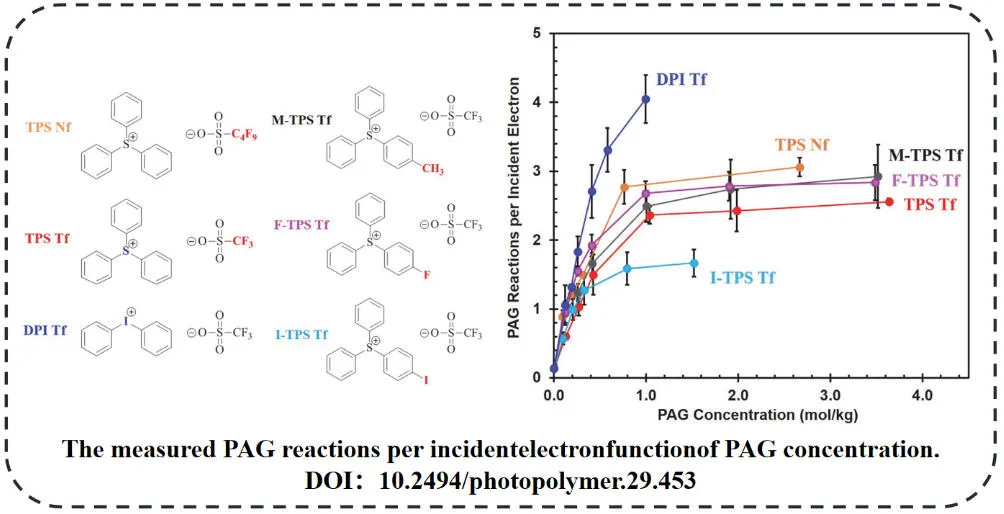
From a structural perspective, the anionic structure is key to regulating acid diffusion. Traditional sulfonate-based PAGs generate small-molecule sulfonic acids that are highly acidic and compact, resulting in high acid diffusion rates and excellent sensitivity. However, they produce rough edges on thick-film patterns and exhibit poor dimensional stability, making them suitable only for low-precision, thin-film processes. High-steric-hindrance anionic PAGs, by introducing fused rings, long alkyl chains, and branched skeletons, increase the molecular weight and steric hindrance of the acid anion, thereby restricting the free migration of the acid within the PSPI polymer network. This significantly reduces lateral diffusion and improves pattern contours. However, the increased molecular rigidity reduces UV absorption efficiency, leading to a decline in sensitivity. The cationic moiety governs the PAG’s UV absorption characteristics and thermal stability. Aryl palladium cations exhibit stronger absorption in the i/g bands and provide better photosensitive response; however, some palladium salts lack sufficient thermal stability and are prone to premature decomposition during the pre-bake stage, causing dark reactions and resulting in residual adhesive on the base film. Therefore, when selecting a formulation, it is necessary to match the cation’s absorption wavelength while also considering its thermal decomposition temperature to avoid a narrowing of the process window caused by acid generation during the pre-baking stage.
Formulation Synergy: Integrated Design of PAG Content, Quenchers, and Matrix Resin
At the formulation level, in addition to the main PAG structure, the amount added, the combination of quenchers, and the resin matrix all affect the sensitivity-acid diffusion balance. If the PAG content is too low, acid production is insufficient, resulting in inadequate sensitivity and residual development; if the content is too high, the total free acid increases, accelerating acid diffusion. At the same time, the small PAG molecules themselves can degrade the mechanical, thermal, and dielectric properties of the cured PSPI, affecting the long-term reliability of the encapsulation. Alkaline quenchers are a common means of control; trace amounts of quencher can capture diffusing free acid, compress the acid diffusion range, and optimize pattern edges; however, an excess of quencher will neutralize the effective photo-generated acid, directly weakening photosensitivity, so precise formulation is required. Additionally, the crosslinking density and free volume of the PSPI matrix resin can restrict the movement of acid molecules; a highly crosslinked, dense resin can inherently slow acid diffusion, allowing for the use of a PAG with relatively higher sensitivity.
Application-Specific Selection: Matching PAG Solutions to Packaging Precision
PAG selection strategies must be tailored to different application scenarios in advanced packaging. For coarse-line, thick-film PSPI, priority should be given to high sensitivity; select a PAG with high absorption efficiency, combined with a small amount of quencher, to meet mass production efficiency requirements. For micron-level fine redistribution layer (RDL) patterns, acid diffusion must be strictly controlled; prioritize PAGs with high steric hindrance, sacrificing a small amount of sensitivity in exchange for stable line widths; In high-reliability packaging scenarios, PAG decomposition byproducts must also be evaluated to prevent small-molecule residues from causing bubbling or dielectric constant drift at high temperatures.
PAG selection for advanced packaging PSPI should not solely pursue high sensitivity or extremely low acid diffusion; it must be based on target line width, film thickness, exposure light source, and thermal process conditions. Starting with the cationic and anionic structures of the PAG, and combining synergistic formulation with quenchers and matrix resins, a comprehensive evaluation system for sensitivity, acid diffusion, thermal stability, and post-curing reliability must be established. This approach aims to find the optimal balance between the process window and long-term device reliability, thereby supporting the mass production of high-density interconnects in advanced packaging.
HEYNOVA
an excellent service provider of key new materials and overall solutions for the global high-tech industry, focusing on the R&D and production of Polyimide monomer, Photoresist monomer & PAG, OLED monomer, Lithium battery materials, and customized services.


 English
 Nederland