Functional Mechanism and Technical Advantages of the Si-BARC Silicon-Based Anti-Reflection Coating
Si-BARC (Silicon-Based Anti-Reflection Coating) serves as the central functional layer in a three-layer architecture. It is an organic-inorganic siloxane hybrid film with a thickness controlled between 30 and 60 nm and a silicon content ranging from 5% to 40%. Compared to the pure absorption mechanism of SOC, Si-BARC employs a composite optical mechanism of interference extinction combined with weak absorption. This perfectly complements the strong absorption system of SOC, addressing the issue of insufficient reflection suppression in single-absorption systems under high NA and wide-angle incidence conditions.
Optically, Si-BARC functions as a bottom anti reflective coating and strictly adheres to the 193 nm λ/4 thin-film interference criterion. By precisely controlling the film thickness and refractive index, it creates a 180o phase difference between the reflected light at the “photoresist/Si-BARC” upper interface and the reflected light at the “Si-BARC/SOC” lower interface, achieving destructive interference and thereby realizing secondary optical attenuation. The SOC is responsible for the primary absorption of vertically incident light, while the Si-BARC handles the interferential cancellation of obliquely incident light. Together, they achieve ultra-low reflectivity across all angles and a wide process window, completely eliminating standing waves, pattern notches, and local scattering defects.
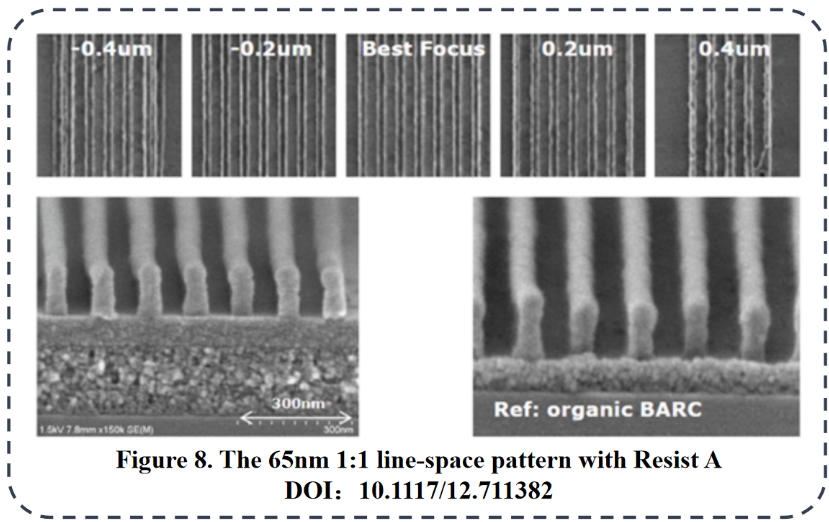
At the etching process level, the silicon component of Si-BARC is key to advanced pattern transfer. During oxygen plasma etching, a dense SiO2 passivation layer spontaneously forms on the film surface, significantly reducing the etch rate and serving as a stable intermediate hard mask. The complete pattern transfer process consists of three steps: fluorine-based etching of Si-BARC using photoresist as a mask; oxygen-based etching of SOC using Si-BARC as a mask; and deep etching of the substrate using the thick carbon layer on SOC as a mask. This perfectly addresses the process challenge posed by ultra-thin photoresist materials that cannot withstand deep etching.
Mass Production Synthesis Formulation for Si-BARC Siloxane Monomers
The optical parameters, silicon content, and etch resistance of Si-BARC are entirely determined by the siloxane monomer formulation. Based on the sol-gel hydrolysis and polycondensation process, the industry has developed two mature synthesis formulations—a medium-silicon general-purpose type and a high-silicon hard mask type—to accommodate different process scenarios.
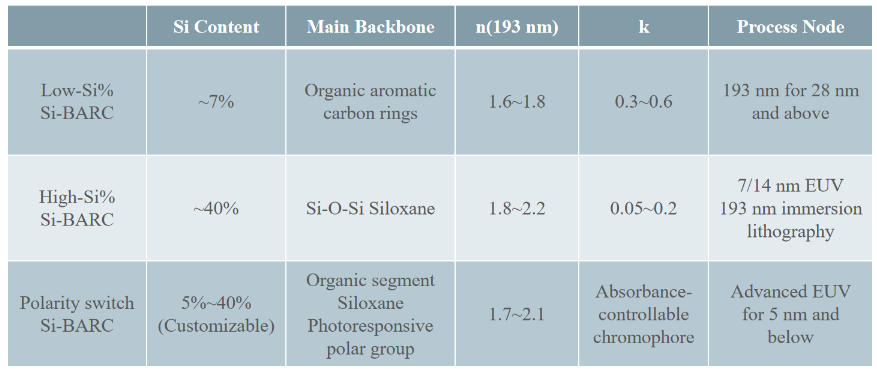
General-purpose Si-BARC with medium silicon content is formulated with a silicon content of 8% to 12%, focusing on optical matching and interlayer compatibility, and is used in 28/14 nm conventional logic processes. The molar ratio of monomers is 60% PTMS, 30% MTMS, and 10% GPTMS. PTMS introduces a phenyl-conjugated structure to enhance the n/k parameters and ensure interference extinction capability; MTMS provides a flexible methyl structure to improve resin solubility and reduce film-forming stress; GPTMS introduces epoxy-reactive groups to enable low-temperature self-crosslinking and reduce defects caused by small-molecule volatilization. When combined with β-naphthol as a light-absorbing copolymer monomer, the system consistently delivers high-quality optical performance with n=1.85~1.95 and k=0.28~0.35, featuring a wide process window and high yield stability.
The high-silicon hard mask model Si-BARC can achieve a silicon content of up to 40%, featuring an ultra-high etch selectivity ratio and is suitable for challenging processes such as 3D NAND and SAQP quadruple patterning. The monomer ratio is 45% DMDES, 35% PTMS, and 20% MTES. The bifunctional DMDES significantly increases silicon backbone density and enhances resistance to oxygen etching; PTMS provides aromatic light-absorbing structures, compensating for the relatively low k-value typical of high-silicon systems; MTES undergoes mild hydrolysis, resulting in a more uniform resin molecular weight distribution and excellent film thickness consistency. The system employs BHPF fluorene-based monomers in copolymerization, resulting in high film rigidity and minimal bake shrinkage, which effectively suppresses line wobble distortion. The etch selectivity ratio between Si-BARC and SOC can reach 1:18, with extremely low hard mask loss.
Both formulations follow a standardized synthesis process: low-temperature acid-catalyzed hydrolysis to produce silanol intermediates, temperature-elevated copolymerization with aromatic monomers, vacuum removal of alcohol byproducts, dilution with PGMEA solvent, and precision filtration, ultimately yielding photolithography-grade high-purity coating solutions.
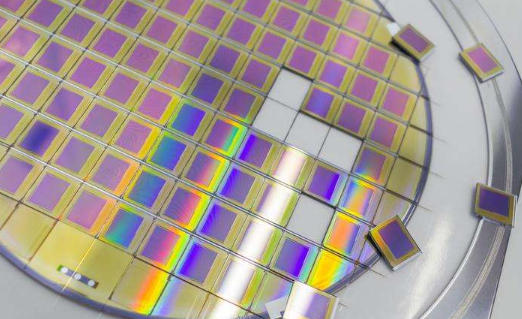
The SOC+Si-BARC dual-layer architecture achieves optimal complementarity in material performance. SOC addresses the shortcomings of thin Si-BARC—namely, its inability to achieve planarization and insufficient light absorption—while Si-BARC compensates for the limitations of a single-layer SOC, such as the lack of interference control and etching selectivity. This composite system offers four major advantages: global planarization, low reflection at all angles, low-roughness imaging, and high selectivity in pattern transfer. It resolves the process challenges that traditional single-layer BARC cannot address, such as adapting to topographical variations, high-reflection substrates, and etching with high aspect ratios.
Currently, this three-layer lithography dual-layer anti-reflection system has become the dominant solution for advanced 193 nm immersion lithography. It is widely used in the mass production of logic chip FEOL gates, BEOL metal interconnects, high-density through-holes, and 3D NAND multi-layer stacked structures, providing a solid foundation of materials and processes to ensure nanoscale lithographic dimensional accuracy and process yield.
HEYNOVA
an excellent service provider of key new materials and overall solutions for the global high-tech industry, focusing on the R&D and production of Polyimide monomer, Photoresist monomer & PAG, OLED monomer, Lithium battery materials, and customized services.


 English
 Nederland


![5-(3'-(4,6-diphenyl-1,3,5-triazin-2-yl)-[1,1'-biphenyl]-3-yl)-7,7-dimethyl-5,7-dihydroindeno[2,1-b]carbazole 1257248-13-7 C42H30N4](/uploads/image/20251017/1257248-13-7-china.webp "5-(3'-(4,6-diphenyl-1,3,5-triazin-2-yl)-[1,1'-biphenyl]-3-yl)-7,7-dimethyl-5,7-dihydroindeno[2,1-b]carbazole 1257248-13-7 C42H30N4")
-new-material-technology-co.,-ltd.-wechat.webp)